
A Handshake That Built More Than a Bridge
Raspberry Falls Golf & Hunt Club | Leesburg, Virginia
Some bridge projects begin with a request for proposal. Others begin with a handshake.
“The original bridge had failed twice due to heavy storm washouts.”
— Steve Clark, PGA, President, Raspberry Golf Management
For many golf courses, a bridge is more than a structure. A golf course bridge replacement is an opportunity to restore an important part of the golfer experience, course operations, and the overall landscape. When a crossing is lost, the challenge is finding a solution that restores functionality while respecting the vision and identity of the property. Located in Leesburg, Virginia, Raspberry Falls Golf & Hunt Club is a highly regarded daily-fee golf course designed by Gary Player, recognized for its Scottish links-inspired design, rolling terrain, natural features, and views of the Catoctin Mountains.
The Connection: A Conversation That Started It All
The story began in July 2025 at the Mid-Atlantic National Golf Course Owners Association (NGCOA) event, where we met Steve Clark, PGA, President of Raspberry Golf Management. Steve introduced us to Willy Lutz, PGA, General Manager of Raspberry Falls, and that introduction opened the door to a conversation about restoring an important crossing that had once served the course.
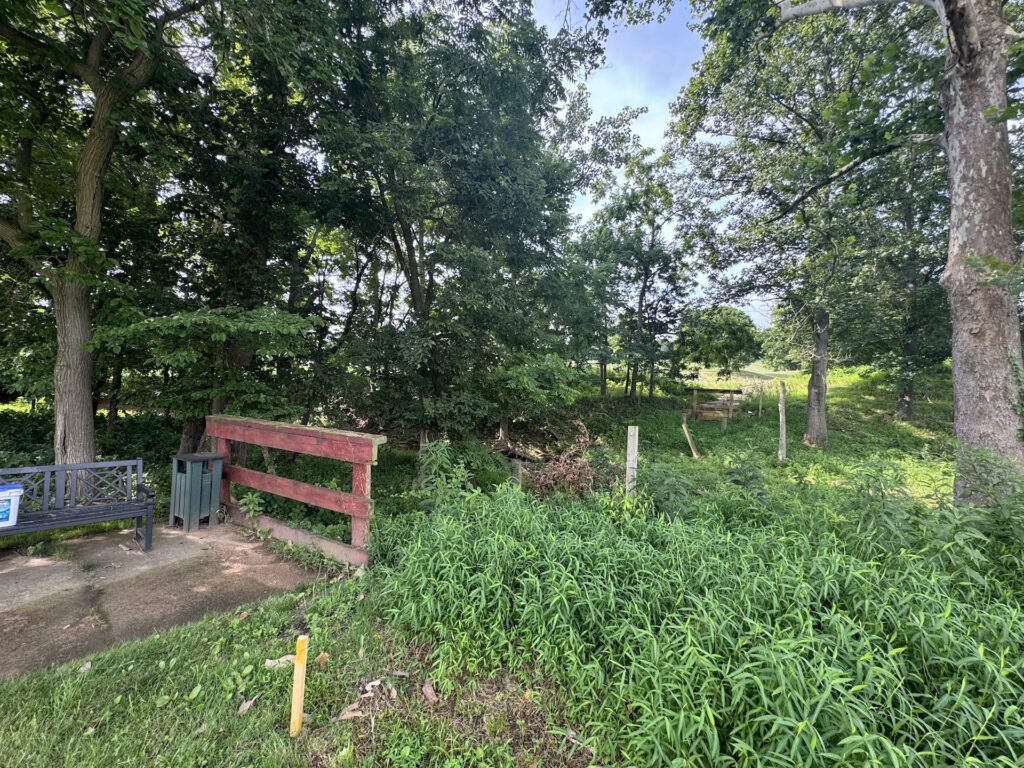 The goal was clear: replace the former bridge at the same location and within the same 80-foot by 8-foot footprint, preserving the original crossing while creating a structure designed for long-term performance.
Understanding the Challenge
Replacing a golf course bridge requires more than selecting a structure. Each site has its own considerations—terrain, access, foundations, installation requirements, and the role the crossing plays within the overall golf experience.
For Raspberry Falls, the solution needed to address the challenges that had caused the previous structure to fail while maintaining the course’s design vision and natural surroundings.
Engineering the Solution
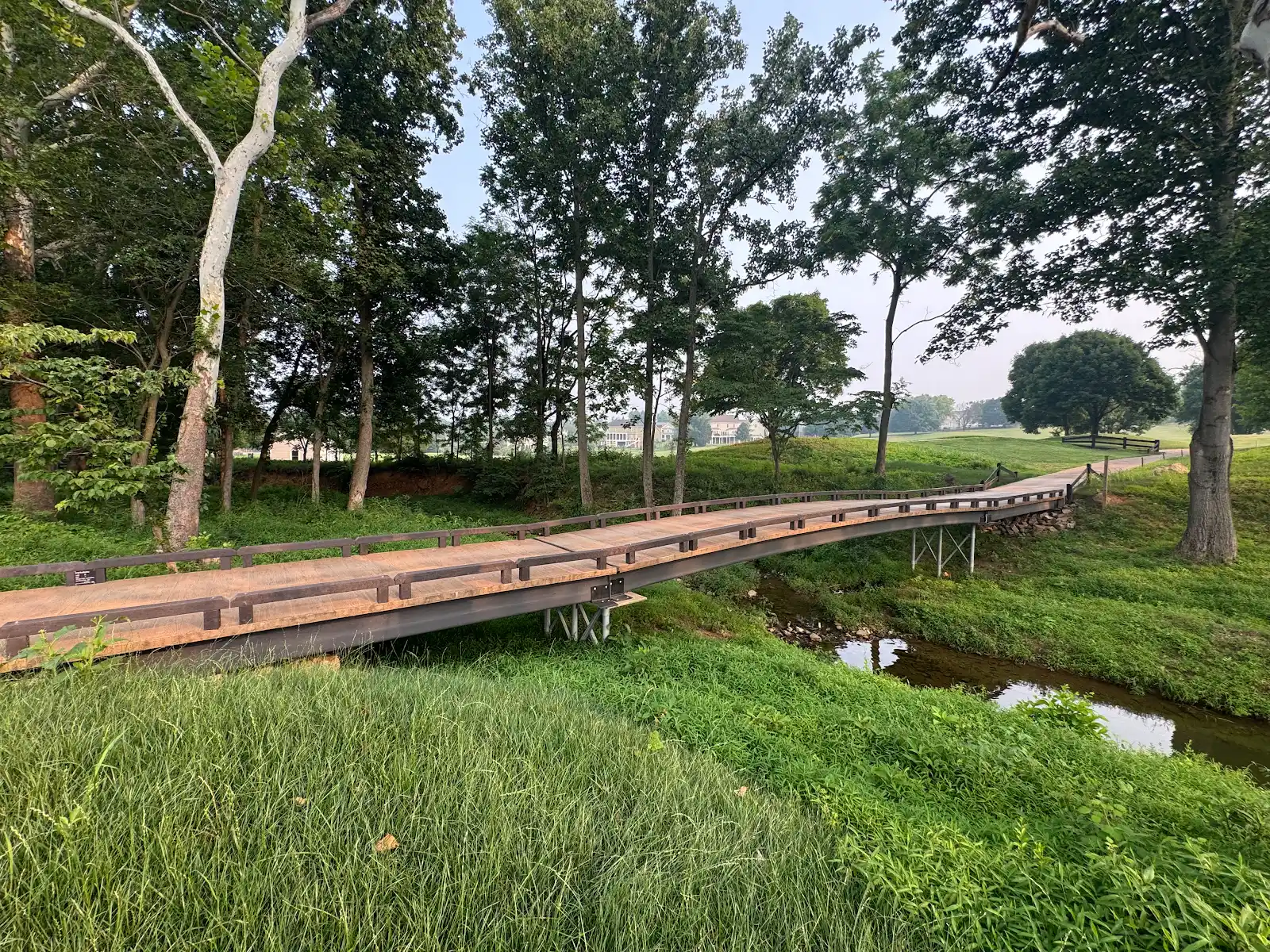
Working closely with Willy, our engineering team, and installer Anthony Sinacola, Links Bridges developed an 80’ × 8’ Woody-style fiberglass bridge designed specifically for the crossing.
To achieve the required span, the bridge was configured with two 20’ side sections and a 40’ center section, incorporating the graceful arch profile of the popular Woody bridge design. Finished with a weathered wood appearance and equipped with curbs, the bridge maintains the traditional look preferred for golf course settings while providing the strength and durability of fiberglass construction.
Designed for a 10,000 lb live load, the structure provides confidence for long-term performance. Unlike traditional bridge materials, fiberglass does not rot, rust, or deteriorate, allowing the bridge to deliver an expected 75+ years of service with minimal maintenance.
The Result
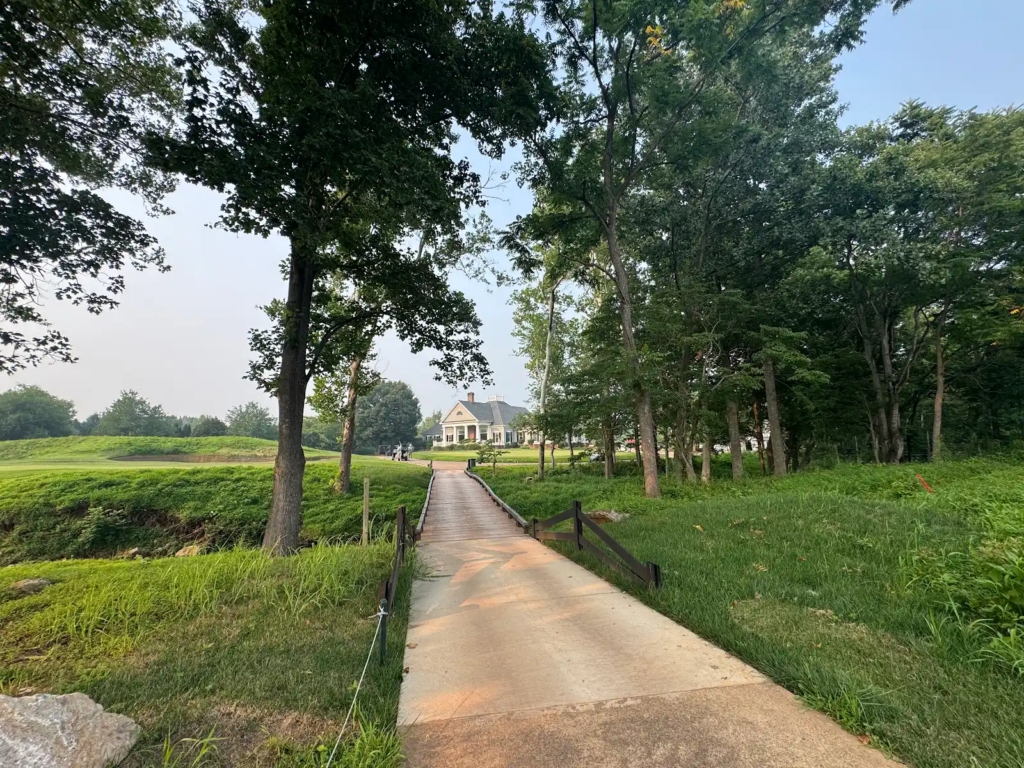
The completed crossing restored an important connection within Raspberry Falls while fitting naturally into the course’s landscape and design vision.
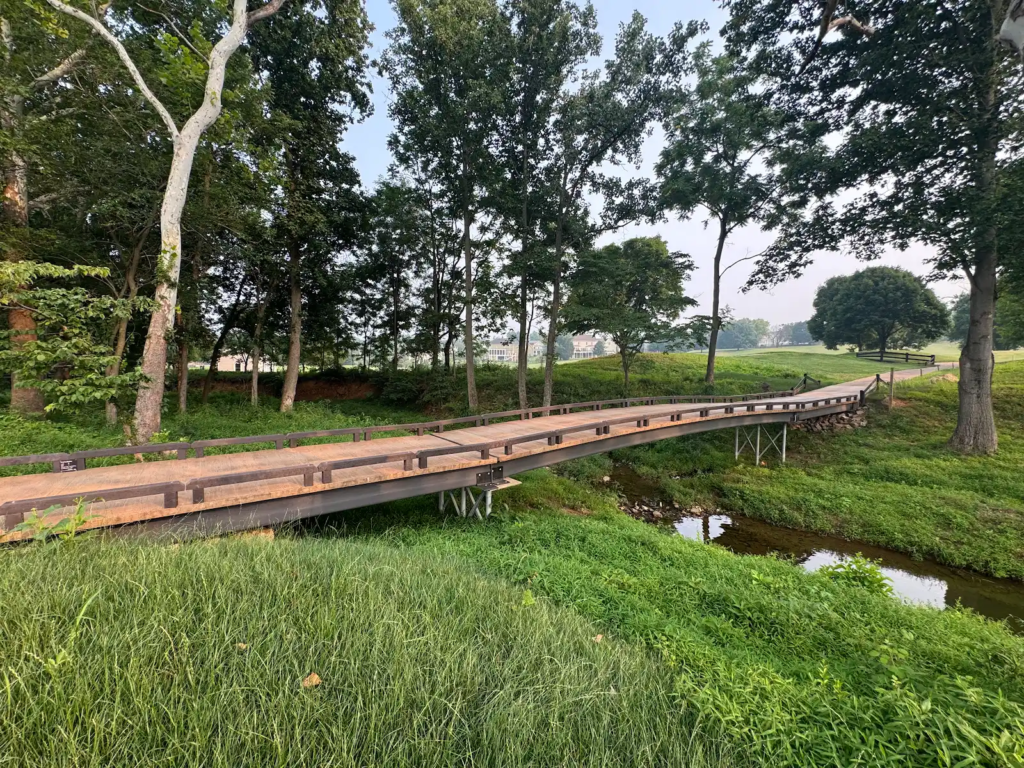
Steve Clark reflected on the completed installation:
“The new bridge very much complements the course and is consistent with architectural changes that we’ve made to improve the course over the years. Links Bridges’ team was fantastic to work with on all phases of the project—planning, construction, and timeline of the project.”
Every golf course has challenges that are not always visible to golfers. Behind every successful improvement is a story of listening, collaboration, and finding the right solution.
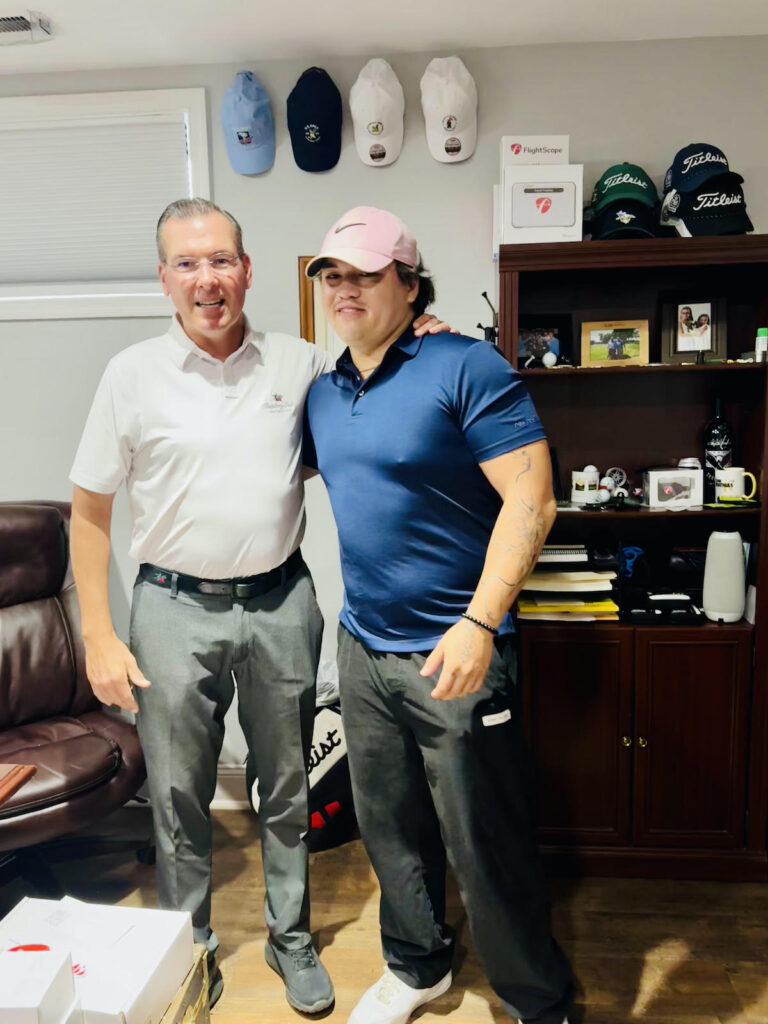
At Raspberry Falls Golf & Hunt Club, a handshake at an industry event became a partnership that restored an important crossing—creating a lasting connection between people, place, and play.
Another Bridge Tale built through relationships, collaboration, and thoughtful engineering.